
Enhancing Ecosystem Services, Improving Community Wellbeing
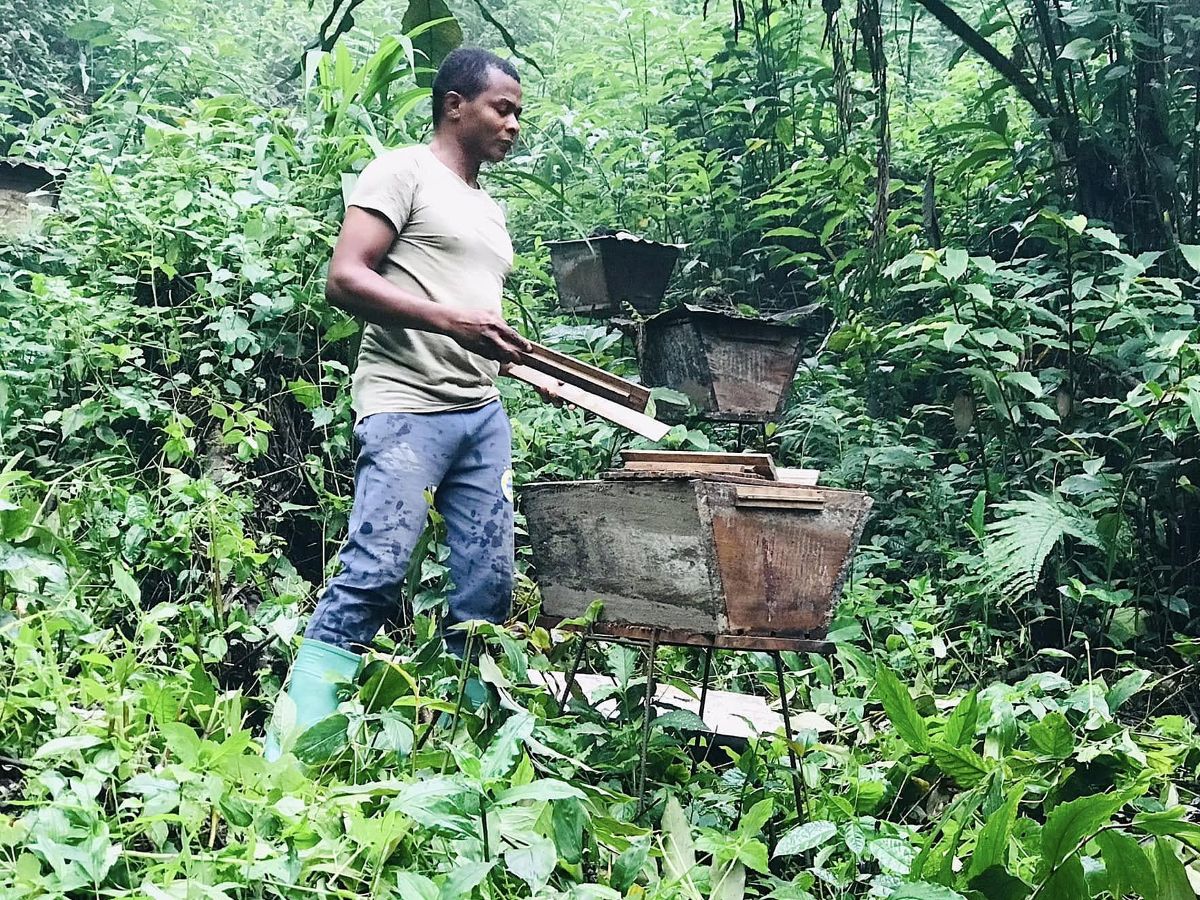
Global Hand Cameroon has launched a new initiative to expand its very successful modern beekeeping program, and we are currently seeking additional funding to purchase a suitable plot of land on which we can add more Kenyan Top Bar Hives. By expanding our apiary, we will be able to offer more hands-on educational programs for villagers and students, empowering the local economy and strengthening biodiversity and forest resilience.
Project Objectives
- increase the size of our apiary
- increase the number of beehives we are actively maintaining
- increase the local bee population and improve on the ecosystem services
- train students and local farmers on modern beekeeping methods (hive construction and colony management)
- reduce poverty amongst low-income community members
- provide a natural, healthy sweetener
Project Details
Global Hand Cameroon is currently evaluating the purchase of a small parcel of land just outside the town of Buea. It is close to the forest cover as well as close to farms that have flowering food crops with high biodiversity and medicinal values, where bees can easily forage for nectar. The land can be used for other agricultural activities such as growing beans and corn which aren’t a threat to beekeeping in case of heavy winds or during harvesting. These are also the best crops to integrate with beekeeping when considering the highly defensive nature of the African melifera bees.
We have 80 new Kenyan Top Bar Hives ready to install on the land; the honey will be processed using a modern honey press that was constructed locally.

Project Background
Honey hunting has had a long history in traditional forest life in Cameroon. However, because the traditional collection methods utilize fire, it is one of the leading causes of destructive bushfires. These uncontrolled bushfires have contributed to significant forest degradation and environmental decline, and bee populations and biodiversity in general have suffered greatly. Despite these serious issues, wild honey hunting and traditional beekeeping methods are still commonly practiced, especially amongst forest dependent communities.
Modern beekeeping methods, in contrast, do not involve the same fire risks and can actually enhance forest health and biodiversity by augmenting the bee population and increasing pollination. In addition, modern beekeeping can sustainably produce greater quantities of honey and can provide employment and greatly improve living standards for local villagers. In fact, modern beekeeping aligns with four of the United Nations Sustainable Development Goals (SDGs): poverty reduction (SDG 1), sustainable communities (SDG 11), responsible consumption and production (SDG 12), and climate action (SDG 13).
At its core, modern beekeeping is a powerful tool for both poverty alleviation and biodiversity protection at the grass roots level.
Recognizing this potential, GLOHA has established a research-based apiary that serves as a reference and training center for community members and students. Utilizing Kenyan Top Bar Hives, this program promotes modern beekeeping practices aimed at diversifying income sources through the sale of honey and other byproducts such as beeswax and propolis.
The initial successes of our program have spurred us to pursue additional avenues for expanding our apiary. With a larger apiary, we will have more opportunities to educate the local populace on modern beekeeping methods and to promote both ecological resilience and economic empowerment. It’s an exciting prospect.
For Further Information
If you are interested in learning more about this project or would like to help fund it, please reach out to us at info@gloha.org. We are always happy to discuss our work and our aspirations.
To read more about the beekeeping activities of Mr. Evambe Thompson, founder and CEO of Global Hand Cameroon, please see this excellent article, published a few years ago in the George Washington University journal, Planet Forward.
Also, please watch the following short video, in which Mr. Evambe Thompson talks about the GLOHA apiary.